-
The strangler-fig pattern keeps the business running while the new system takes over gradually.
-
Feature flags are the safety net that makes incremental migration possible.
-
Every cutover — not just the risky ones — needs its own documented rollback plan.
-
Data migration, not code, is where most modernization projects actually go wrong.
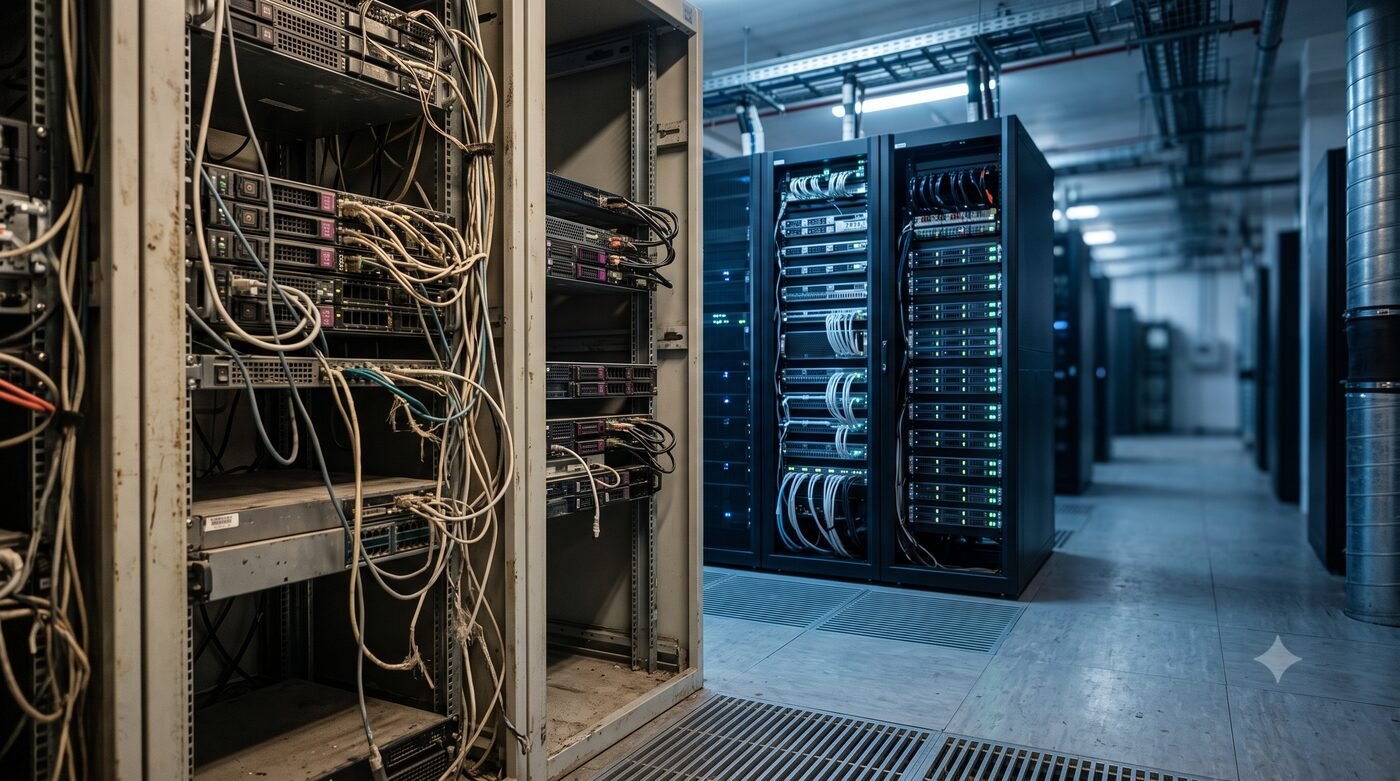
Legacy modernization projects die when teams try to rewrite everything at once. A year into a "quick rewrite," the business is still running on the old system, the new system still isn't feature-complete, and both now need to be maintained in parallel. The projects that survive the transition take a fundamentally different approach.
The Strangler-Fig Pattern
Named after the vine that grows around a host tree and gradually replaces it, the strangler-fig pattern builds new functionality alongside the old system and gradually routes traffic to it, service by service. The old system keeps running the whole time, so the business never has to freeze operations while engineering catches up. It's slower to reach 100% completion than a rewrite, but it's the only approach where the business stays operational at every point along the way.
Feature Flags Are Not Optional
Feature flags let you roll changes out to a subset of users, watch for regressions in production with real traffic, and roll back instantly if something's wrong — without a deploy, and without the all-hands panic that comes with an emergency rollback. Any migration plan that doesn't include a feature-flagging strategy is missing its most important safety net.
Every Cutover Needs a Rollback Plan
Not just the big cutovers — every single one. The migrations that go smoothly treat rollback planning as mandatory for every service migrated, not just the ones that feel risky. The ones that go badly usually skipped rollback planning for a "simple" migration that turned out not to be simple at all.
Data Migration Is the Real Risk
Code migration gets the attention, but data migration is where most legacy modernization projects actually go wrong — a subtly incorrect transformation script can corrupt records in a way that isn't visible until weeks later. Run new and old systems in parallel long enough to reconcile data between them before fully decommissioning the legacy system.
The Unglamorous Truth
The hardest part of modernization is rarely the new code. It's building enough trust in the migration process — through incremental wins, visible rollback plans, and zero-surprise cutovers — that the business actually lets you finish it. Technical excellence gets you halfway there; earned trust gets you the rest of the way.
Notes from the engineers and strategists at S3Dynamis, drawn from active client engagements across AI, software engineering, and data.