

Technology That Adapts to Your Business
We bring together software, systems, AI, data and strategy to explore technology opportunities tailored to your industry.
Find Your Industry, Explore the Opportunity
Pick an industry below for a snapshot of where software, AI, data and cloud technology can typically help.
Choose your industry to begin
Technology solutions that help you attract, engage and retain customers while running lean, scalable and intelligent operations.

Recommendation Systems
Suggest relevant products based on browsing and purchase behavior instead of a one-size-fits-all catalog view.
Customer Intent Prediction
Use behavioral signals to anticipate what a shopper is likely to do next, from browsing to checkout.
Personalization
Tailor content, offers and messaging to individual shoppers rather than a single generic experience.
Modern Commerce Platforms
Build or modernize the storefront and checkout experience around speed and conversion.
Analytics
Connect commerce, marketing and operational data into a clearer picture of what's actually driving performance.
Marketing Automation
Automate lifecycle messaging and campaigns based on customer behavior rather than manual sends.
Business Impact
Higher Conversions
Turn more visitors into customers.
Stronger Customer Loyalty
Personalized experiences that build trust.
Smarter Decisions
Data-driven insights for faster, confident action.
Operational Efficiency
Automation that supports sustainable growth.
Personalization, recommendation systems and unified customer data tend to offer the clearest opportunities, since they directly influence conversion and repeat purchases.
AI can potentially help with product recommendations, demand forecasting, customer segmentation and intent prediction — areas where behavioral and transactional data already exists to learn from.
Not necessarily — even a modest amount of transaction and behavior history can support useful models. We assess what's available during discovery before recommending an approach.
Digital financial experiences, intelligent workflows and analytics that help you serve customers faster while staying secure and compliant.

Digital Financial Platforms
Modernize customer-facing portals and applications for account management, applications and servicing.
Workflow Automation
Reduce manual handoffs in review, approval and servicing processes.
Data & Analytics
Bring transaction and customer data together for clearer operational and risk visibility.
AI-Assisted Operations
Support staff with AI-assisted review, triage and decisioning tools.
Intelligent Document Processing
Extract and structure data from applications, statements and forms automatically.
Customer Portals
Give customers self-service visibility into accounts, applications and status.
Business Impact
Faster Service
Less time spent on manual review and approval.
Stronger Trust
Secure, reliable experiences customers rely on.
Clearer Risk Visibility
Data-driven insight into risk and performance.
Operational Efficiency
Automation that scales with transaction volume.
Workflow automation, unified data, and digital self-service platforms tend to offer the clearest early opportunities, since they touch both operational efficiency and customer experience directly.
AI can potentially support document processing, anomaly detection, risk analytics and customer-facing assistants — always evaluated against your actual data and workflow, not applied as a default.
Not necessarily — many use cases start with the transaction and application data already being generated. We assess what's available before recommending an approach.
Digital patient and member experiences, intelligent workflows and data-driven tools that help care teams work more efficiently.
Digital Healthcare Platforms
Modernize patient- and member-facing portals, scheduling and engagement tools.
Intelligent Workflows
Reduce manual steps in intake, scheduling and administrative processes.
Document Intelligence
Extract and structure information from forms, referrals and records.
Analytics
Bring operational and engagement data together for clearer visibility.
Patient & Member Engagement
Support communication and engagement through digital channels.
Secure Cloud Systems
Modernize infrastructure to support scalable, secure digital services.
Business Impact
Better Access
Simpler scheduling and digital engagement.
Coordinated Care
Connected workflows across teams and systems.
Time Saved
Less manual admin, more time for care.
Clearer Visibility
A data-driven view into operations and outcomes.
Connected workflows, digital patient and member engagement, and unified data tend to be the clearest starting points, since they affect both staff efficiency and the patient experience.
AI can potentially support administrative workflows, document processing and engagement tools — we don't position AI for clinical diagnosis or treatment decisions.
Not necessarily — many opportunities start with operational and engagement data already being collected. We assess what's available before recommending an approach.
Connected booking, guest and marketing experiences that help travelers find and book the right trip, faster.

Booking Platforms
Build or modernize booking flows around speed and clarity.
Recommendation Engines
Suggest destinations, packages or add-ons based on guest preferences and behavior.
Personalized Journeys
Tailor the pre-trip, in-stay and post-trip experience to the individual traveler.
Customer Automation
Automate confirmations, updates and follow-up communication.
Analytics
Connect booking, guest and marketing data for clearer visibility.
Digital Engagement
Support guest communication through digital channels before, during and after the trip.
Business Impact
Fewer Abandoned Bookings
A booking flow guests can complete quickly.
Higher Guest Satisfaction
Personalized, relevant travel experiences.
Repeat Guests
Engagement that extends beyond one trip.
Leaner Operations
Less manual work in guest communication.
Streamlined booking, personalization and unified guest data tend to offer the clearest opportunities, since they affect both conversion and repeat engagement.
AI can potentially support recommendations, lead scoring and guest-facing assistants — areas where booking and behavioral data already exists to learn from.
Not necessarily — even a modest amount of booking and inquiry history can support useful models. We assess what's available before recommending an approach.
Content discovery, audience intelligence and publishing tools that help readers find your best content, and help it earn attention.

Recommendation Systems
Surface relevant content based on audience behavior and interests.
Intelligent Search
Help readers find relevant content even with imprecise queries.
AI Content Workflows
Support tagging, classification and editorial workflows with AI assistance.
Audience Analytics
Understand what content resonates and why.
Digital Publishing Platforms
Modernize the platform content is published and consumed through.
SEO
Improve organic discoverability for content across search.
Business Impact
More Discovery
Content that reaches the right audience.
Stronger Engagement
Readers who come back for more.
Faster Editorial Workflows
Less manual tagging and publishing work.
Clearer Audience Insight
Understand what content actually resonates.
Recommendation systems, search and unified audience data tend to offer the clearest opportunities, since they directly affect discovery and engagement.
AI can potentially support content recommendations, tagging, classification and editorial workflows — areas where content and behavioral data already exists to learn from.
Not necessarily — even a modest content and engagement history can support useful models. We assess what's available before recommending an approach.
Digital learning experiences, AI-assisted guidance and learning analytics that help learners progress and educators focus on teaching.

Learning Platforms
Modernize the platforms learners and educators use day to day.
AI Assistants
Support learners and staff with AI-assisted help and guidance.
Knowledge Systems
Make learning content and institutional knowledge easier to search and access.
Personalized Learning
Tailor content and pacing to individual learners.
Analytics
Surface learner progress and engagement data for better decisions.
Workflow Automation
Reduce manual work in enrollment, grading and reporting.
Business Impact
Higher Engagement
Learning experiences students stick with.
Better Outcomes
Progress visible early enough to act on.
Less Admin Work
Automation frees up staff time.
Personalized Learning
Instruction that adapts to the learner.
Personalized learning, learning analytics and streamlined administrative workflows tend to offer the clearest opportunities, since they affect both engagement and staff time.
AI can potentially support learning assistants, content recommendations and classification — areas where learner and content data already exists to learn from.
Not necessarily — many opportunities start with the enrollment, progress and content data already being collected. We assess what's available before recommending an approach.
Extra engineering capacity, cloud modernization and scoped AI features that help your product ship faster and scale further.
SaaS Product Engineering
Extend engineering capacity for roadmap features and platform work.
AI Integration
Evaluate and build AI features where they genuinely improve the product.
APIs
Design and build APIs that support integrations and platform extensibility.
Cloud Modernization
Modernize infrastructure for reliability and cost efficiency at scale.
DevOps
Improve deployment, monitoring and infrastructure practices.
Product Analytics
Understand how the product is actually being used to guide roadmap decisions.
Business Impact
Faster Shipping
More roadmap delivered without slowing down.
Scalable Infrastructure
Cloud systems that grow with usage.
Smarter AI Bets
AI features scoped to real product value.
Better Product Decisions
Usage data that actually informs the roadmap.
Extending engineering capacity, modernizing cloud infrastructure and scoping AI features around genuine product value tend to be the clearest opportunities.
It depends heavily on the product — we evaluate your existing usage data and roadmap before recommending where AI is likely to add real value versus just complexity.
Not always — it depends on the specific feature. We assess what data you have and what a given AI feature would actually need before recommending an approach.
Workflow automation, client portals and connected data that help your firm spend less time on process and more on client work.
Workflow Automation
Reduce manual steps in client and internal processes.
Customer Portals
Give clients self-service visibility into their work and status.
AI Assistants
Support staff with AI-assisted research, drafting and information retrieval.
Document Intelligence
Extract and structure information from contracts, reports and forms.
Analytics
Bring operational data together for clearer visibility into performance.
Digital Platforms
Modernize the internal and client-facing tools a firm runs on.
Business Impact
More Billable Time
Less time lost to manual process.
Happier Clients
Self-service visibility and faster updates.
Faster Turnaround
AI-assisted drafting and document review.
Clearer Operations
Visibility into where time actually goes.
Workflow automation, client portals and connected operational data tend to offer the clearest opportunities, since they directly reduce manual work.
AI can potentially support document processing, internal knowledge assistants and drafting support — areas where a firm's existing documents and processes provide a natural starting point.
Not necessarily — many opportunities start with documents and workflows you already have. We assess what's available before recommending an approach.
Property search, lead automation and market data tools that help buyers, renters and agents move faster with more confidence.
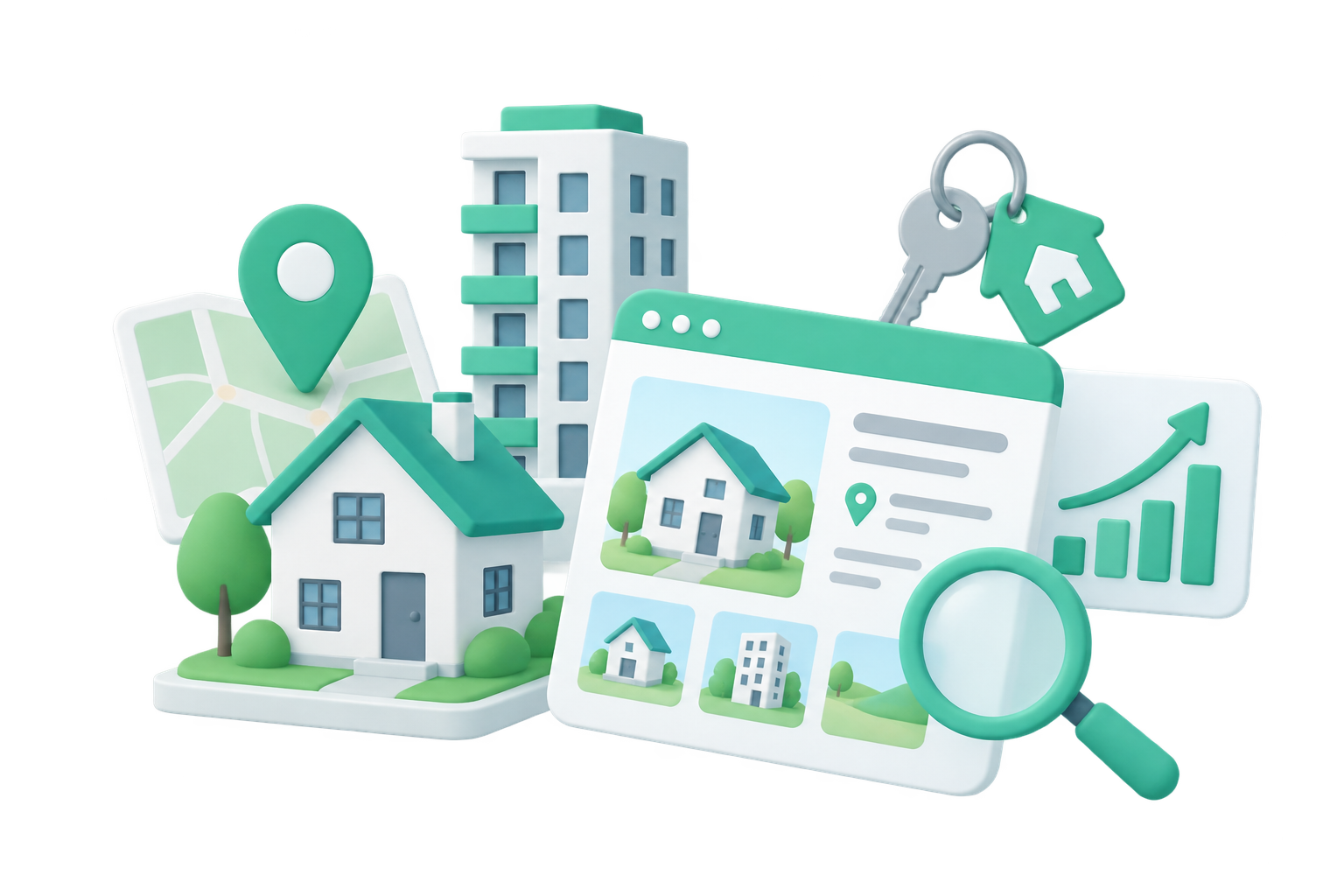
Property Platforms
Modernize listing, search and transaction experiences.
Recommendation Systems
Surface relevant properties based on buyer or renter behavior.
Lead Automation
Route, score and follow up on leads automatically.
Analytics
Bring listing, lead and market data together for clearer visibility.
Search Optimization
Improve organic visibility for listings and content.
Digital Experiences
Modernize the buyer, renter and agent experience across devices.
Business Impact
Faster Conversions
Leads followed up on before they go cold.
Better Matches
Listings that fit what buyers actually want.
Clearer Market Insight
Trends in pricing and demand, visible.
Modern Buyer Experience
A search and inquiry process people trust.
Property search, lead automation and unified data tend to offer the clearest opportunities, since they directly affect how quickly inquiries convert.
AI can potentially support recommendations, lead scoring and inquiry assistants — areas where listing and behavioral data already exists to learn from.
Not necessarily — even a modest amount of listing and inquiry history can support useful models. We assess what's available before recommending an approach.
Real-time tracking, forecasting and connected operations data that help you see what's happening and respond faster.
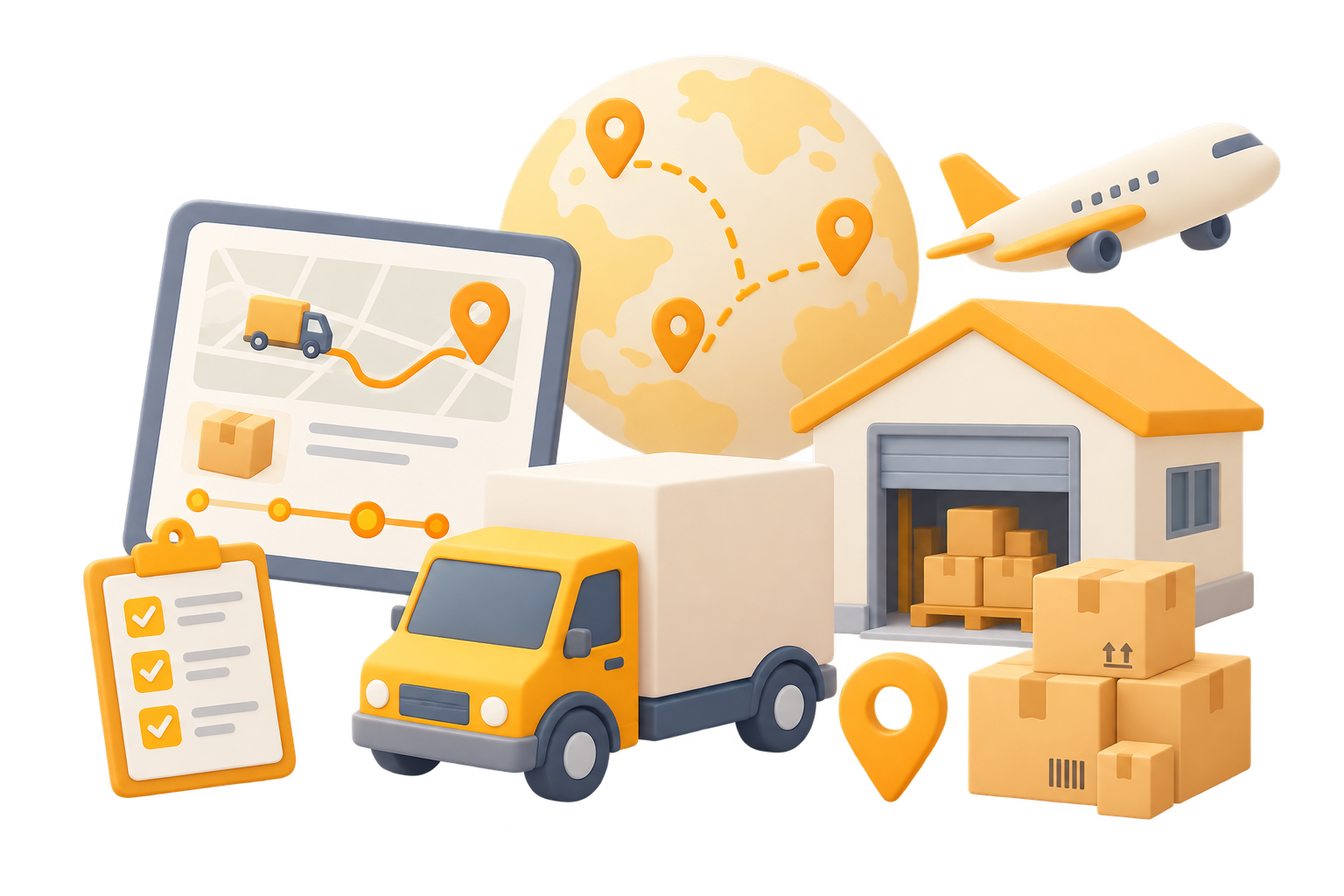
Tracking Platforms
Give teams and customers real-time visibility into shipments and assets.
Forecasting
Use historical and real-time data to anticipate demand and capacity needs.
Route Intelligence
Support smarter routing and dispatch decisions.
Workflow Automation
Reduce manual coordination in dispatch and reporting.
Analytics
Bring operational data together for clearer decision-making.
Data Platforms
Connect fleet, warehouse and order data into a unified view.
Business Impact
Real-Time Visibility
Know what's happening, as it happens.
Fewer Delays
Issues flagged and routed before they escalate.
Smarter Forecasting
Inventory and capacity planned with real data.
Leaner Operations
Less manual coordination across teams.
Real-time tracking, forecasting and unified operational data tend to offer the clearest opportunities, since they directly affect visibility and decision speed.
AI can potentially support demand forecasting, anomaly detection and route intelligence — areas where operational data already exists to learn from.
Not necessarily — many opportunities start with the fleet, order and shipment data already being generated. We assess what's available before recommending an approach.
Predictive analytics, computer vision and connected production data that help you catch issues before they cause downtime.
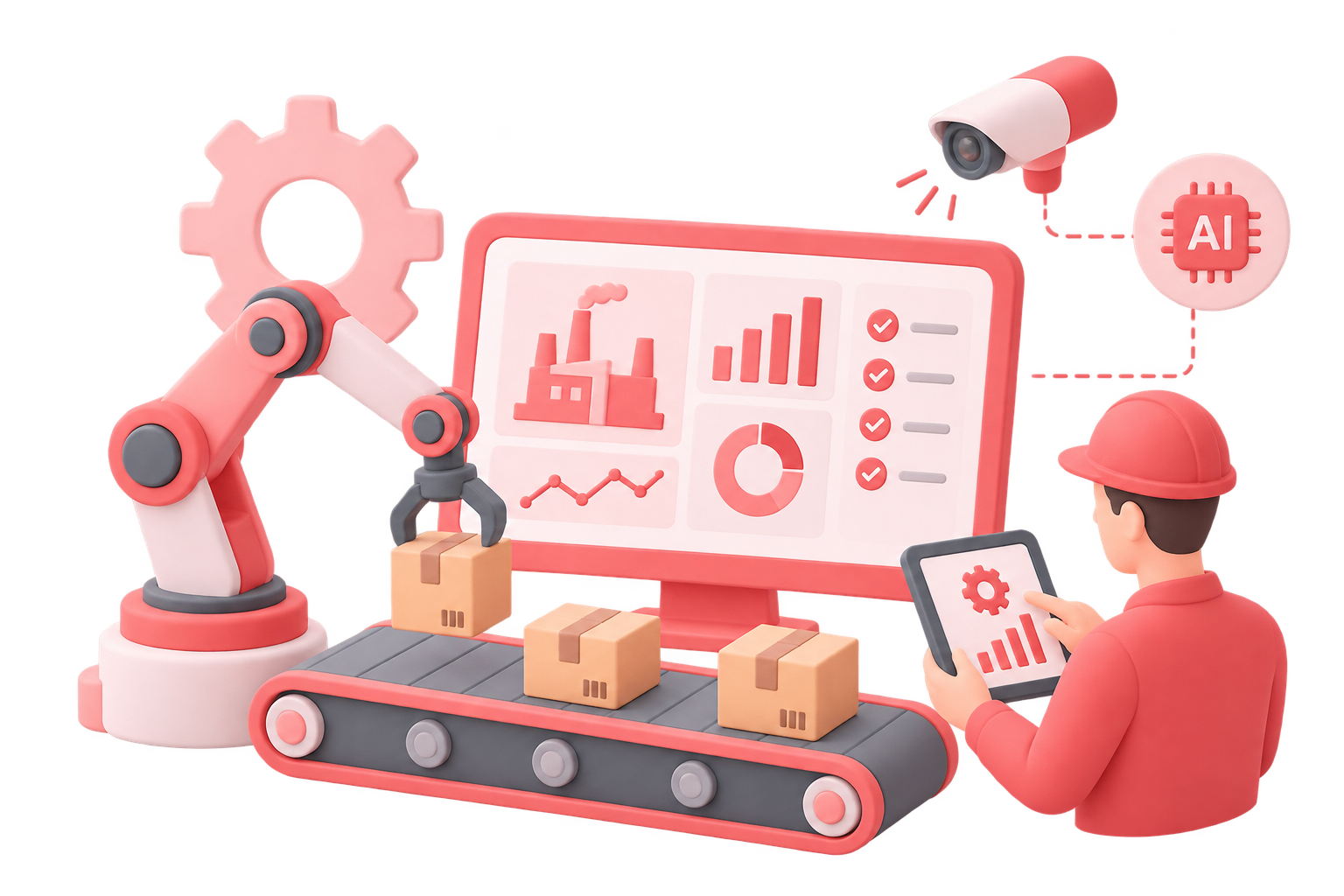
Predictive Analytics
Use production data to anticipate issues before they cause downtime.
Anomaly Detection
Flag unusual patterns in equipment or quality data for review.
Computer Vision
Support visual inspection processes with AI-assisted analysis.
Data Platforms
Connect production, quality and inventory data into a unified view.
Operational Dashboards
Give teams real-time visibility into production performance.
Workflow Automation
Reduce manual coordination in reporting and shift handoffs.
Business Impact
Less Downtime
Equipment issues caught before they escalate.
Consistent Quality
Inspection that doesn't rely on manual checks alone.
Unified Production Data
One view across equipment and quality.
Faster Reporting
Less manual coordination across shifts.
Predictive maintenance, quality analytics and unified production data tend to offer the clearest opportunities, since they directly affect downtime and quality.
AI can potentially support predictive maintenance, anomaly detection and visual inspection — evaluated against the specific equipment and data your operation already has.
It depends on the use case — some, like visual inspection, can start with a modest dataset. We assess what's available before recommending an approach.
Connected apps, usage data and intelligent features that help you extend the product experience beyond the physical vehicle.

Mobility Platforms
Build or modernize connected apps and customer-facing platforms.
Connected Applications
Extend the product experience through companion apps and services.
Analytics
Turn usage and fleet data into clearer operational visibility.
AI Assistants
Support customers or operators with AI-assisted guidance and information.
Personalization
Tailor the digital experience to individual drivers or fleet operators.
Cloud Systems
Modernize the infrastructure supporting connected features at scale.
Business Impact
Extended Product Value
The product experience continues after purchase.
Better Fleet Visibility
Usage and performance data, unified.
Stronger Retention
Engagement that doesn't end at the sale.
Scalable Infrastructure
Systems ready for growing connected features.
Connected apps, unified usage data and digital customer experiences tend to offer the clearest opportunities, since they extend the physical product.
AI can potentially support recommendations, assistants and fleet analytics — areas where usage and vehicle data already exists to learn from.
Not necessarily — many opportunities start with the usage and fleet data already being generated. We assess what's available before recommending an approach.
Industries & Technology Questions
Answers to what we hear most when exploring a technology opportunity across industries.
-
What industries can S3Dynamis support?
-
Does S3Dynamis specialize in a specific industry?
-
Can technology solutions be tailored to our industry's needs?
-
How does S3Dynamis identify the right technology opportunity?
-
Can S3Dynamis work with our existing systems and technology?
-
Can S3Dynamis help us explore AI opportunities in our industry?
-
How do we start a technology discussion with S3Dynamis?